Astronomy Class Web Page
Monday, November 20, 2017
Question 1
Question 2
Question 3
Death of heavy stars
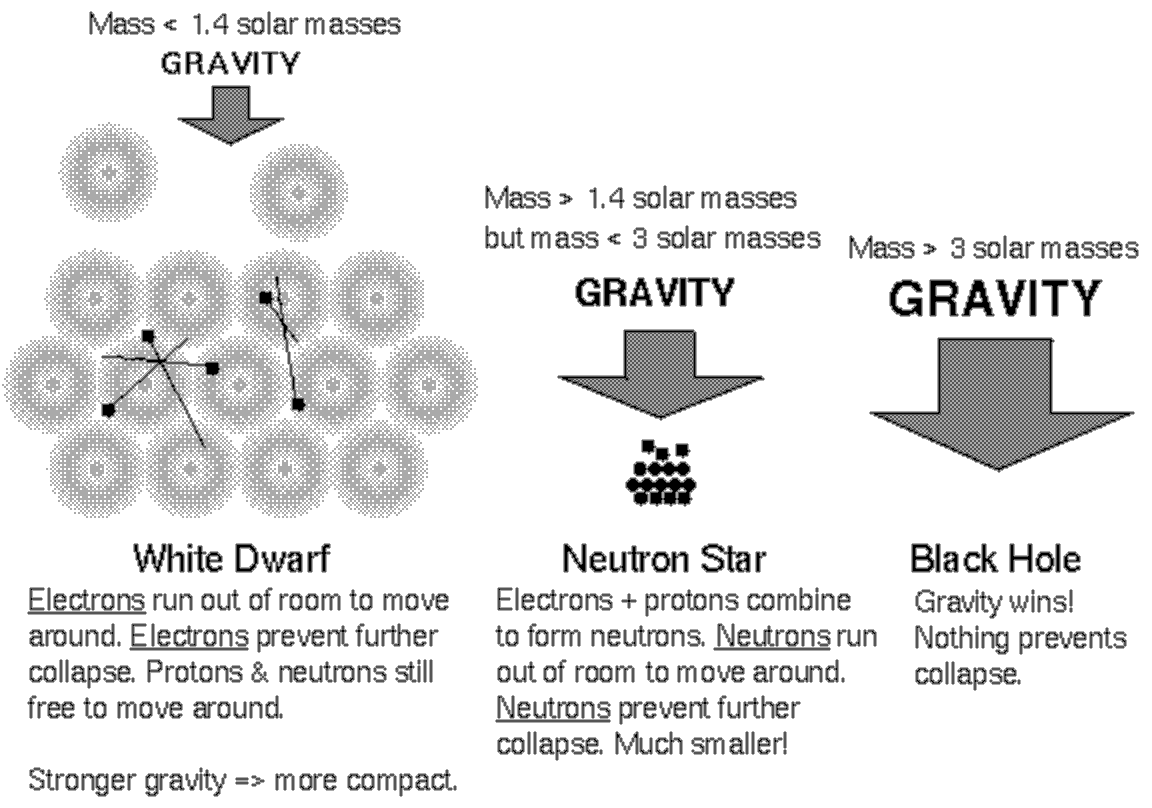
What is left after a Type II supernova?
determined by mass
Star Wars trash compactor scene analogy
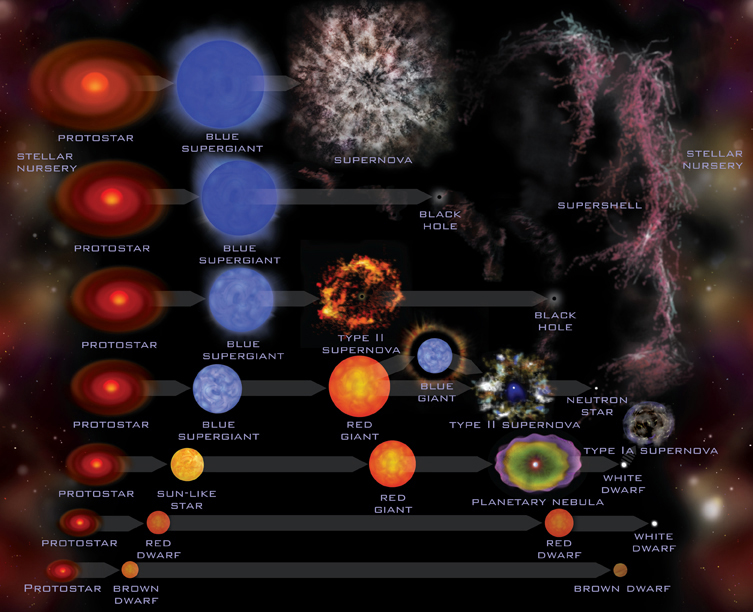
Stellar Evolution Summary
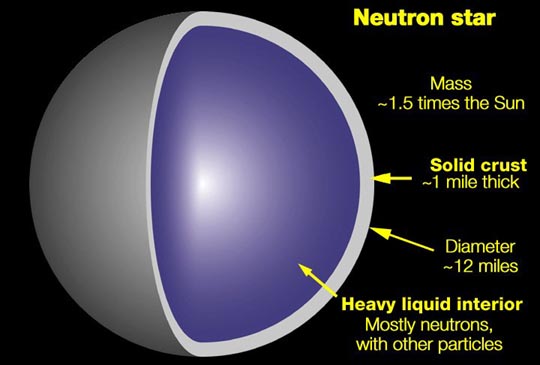
neutron star
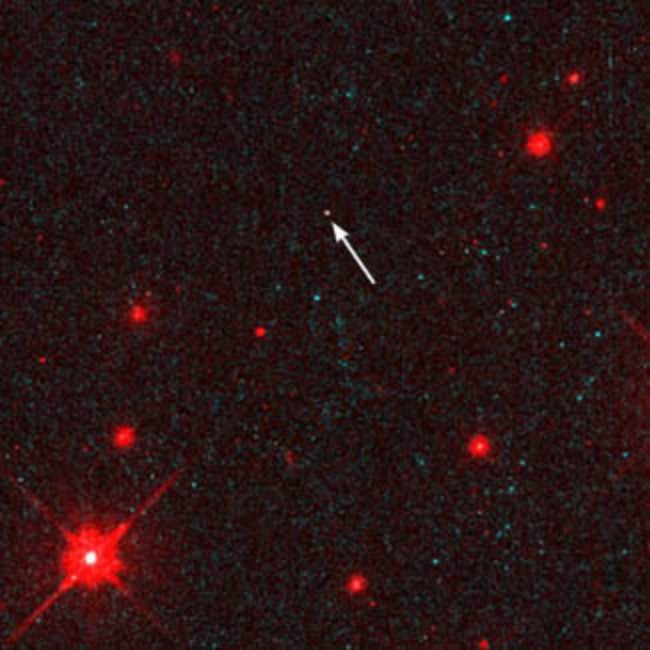
HST Image
of a neutron star: 27 km across, 660,000 K temp.
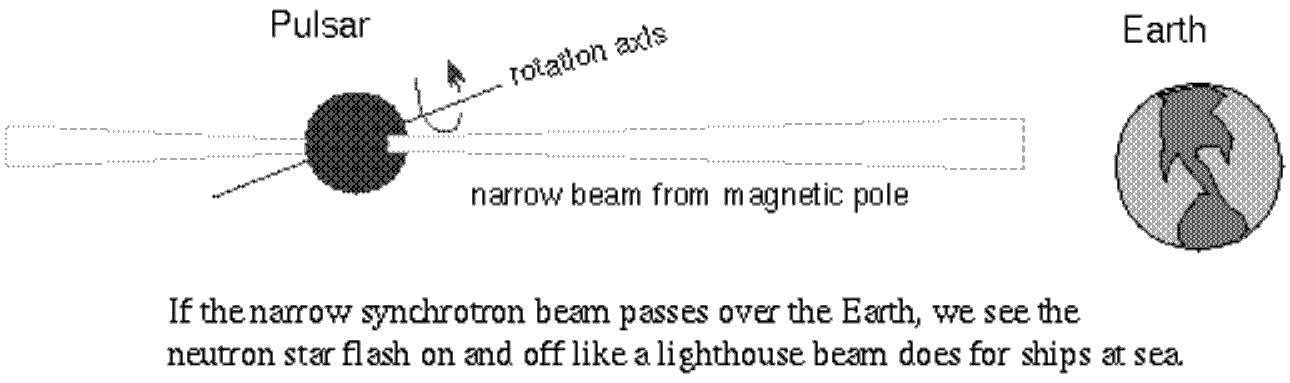
Pulsar
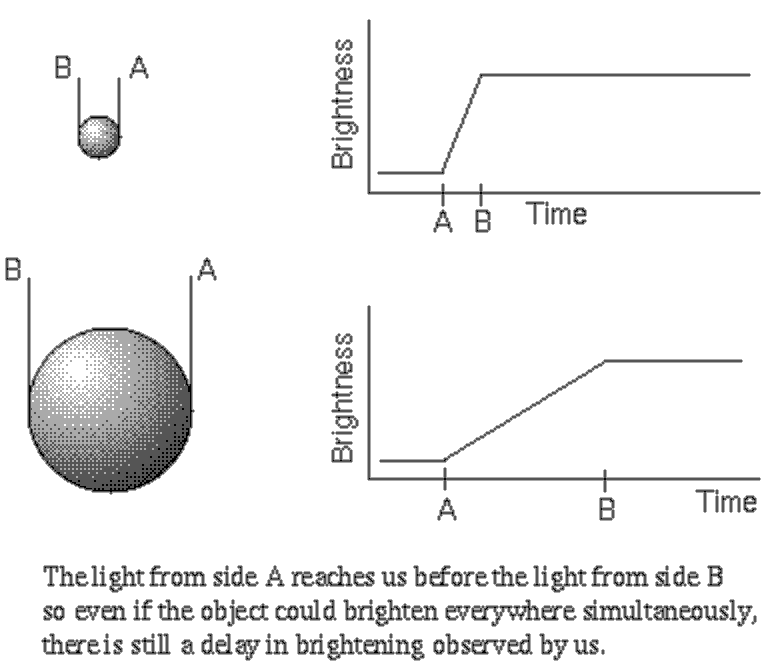
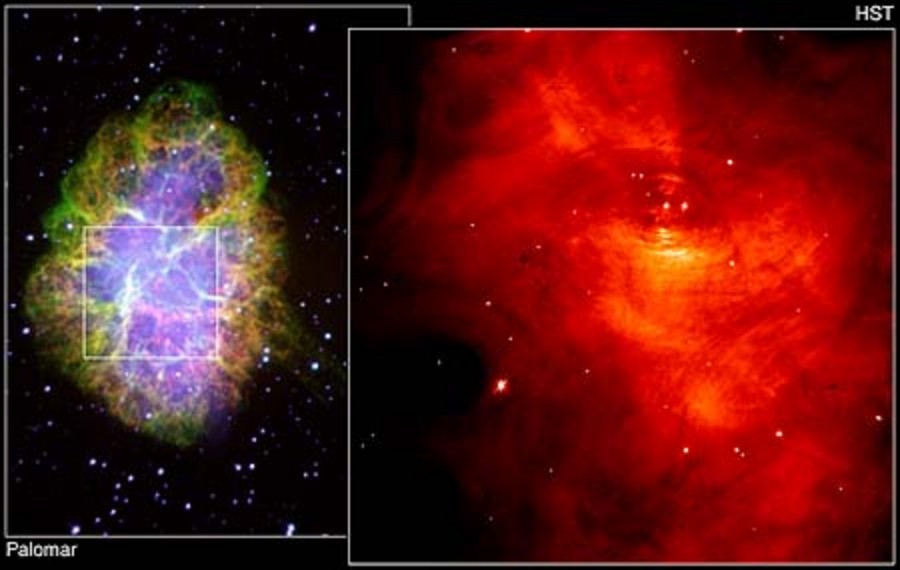
Crab pulsar
lighthouse model
animation of lighthouse model
frequency of pulsar interpretted as sound
Recent gravitational waves announcement was about two
colliding neutron stars
Black Holes
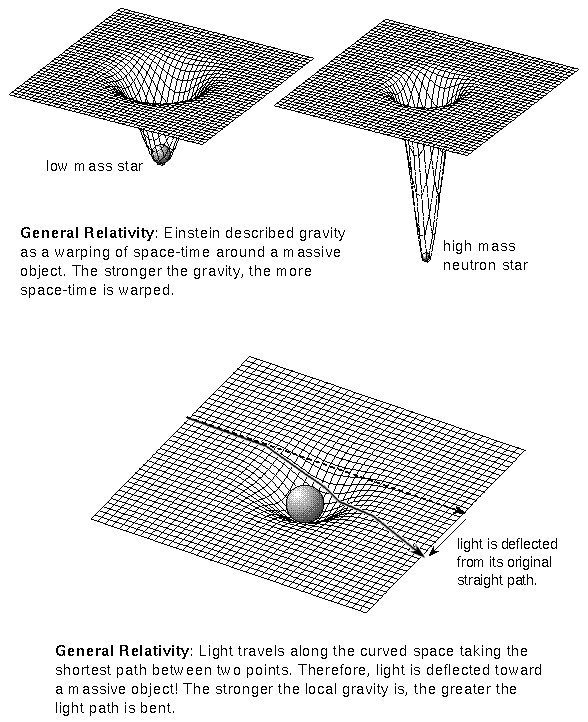
Einstein's Theory of General Relativity:
gravity warps space-time
Visualization of orbits with general relativity
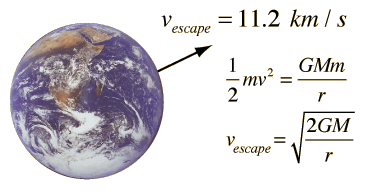
Escape velocity revisited
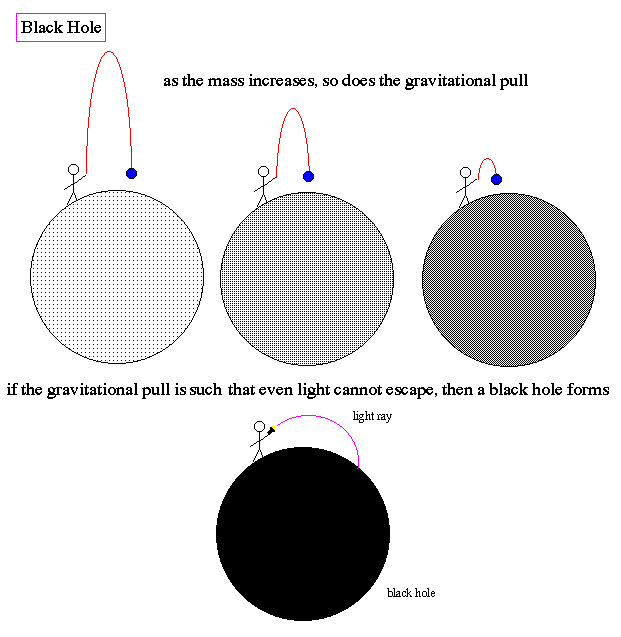
Escape velocity for black hole
object
Mass (kg)
radius (m)
escape velocity (m/s)
Earth
6x10
24
6.4x10
6
1.1x10
4
Sun
2x10
30
7x10
8
6.2x10
5
Neutron Star
4x10
30
2x10
4
1.6x10
8
Black Hole
8x10
30
(1)
3.3x10
10
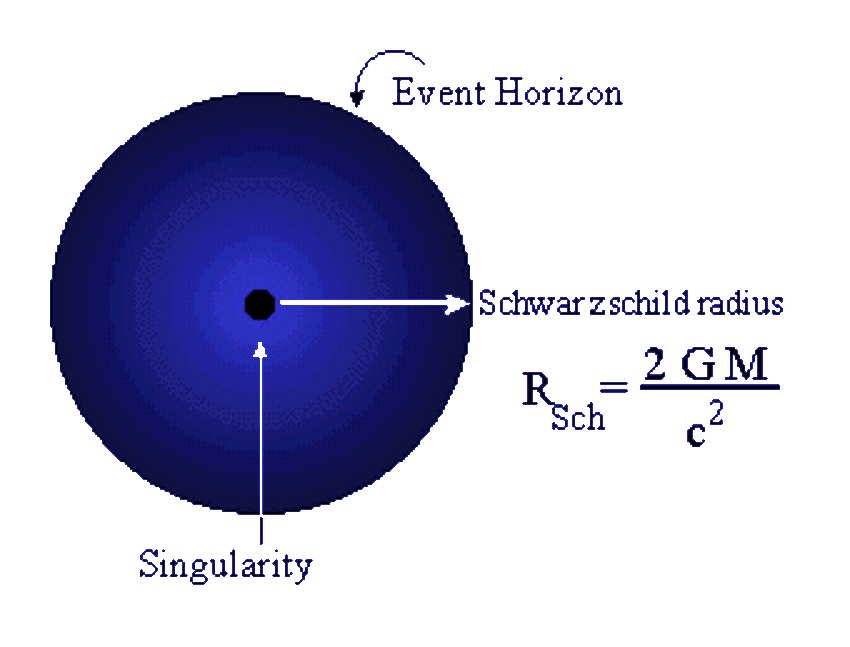
Schwarzschild radius
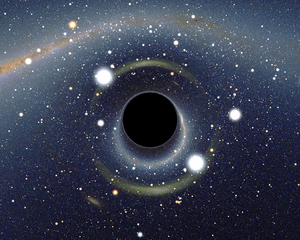
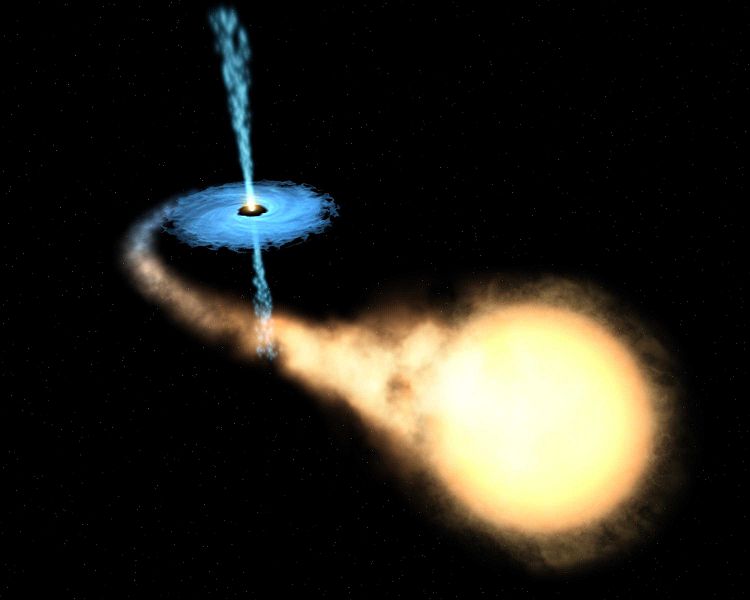
Artist rendering of black hole
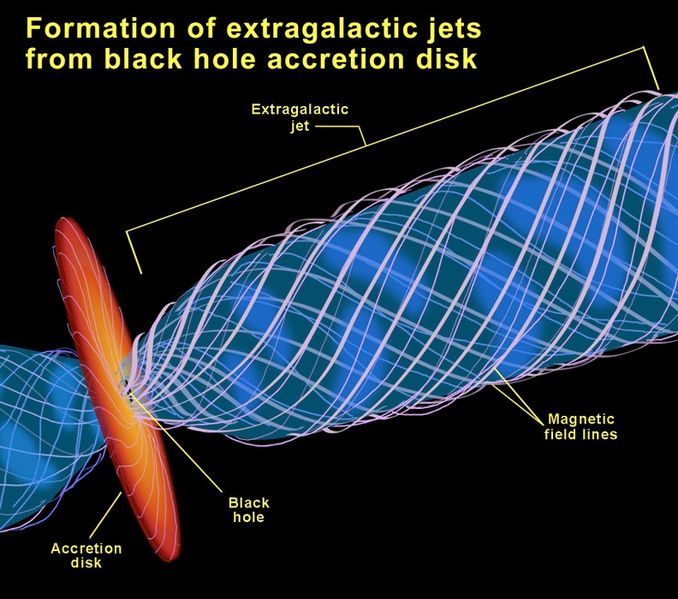
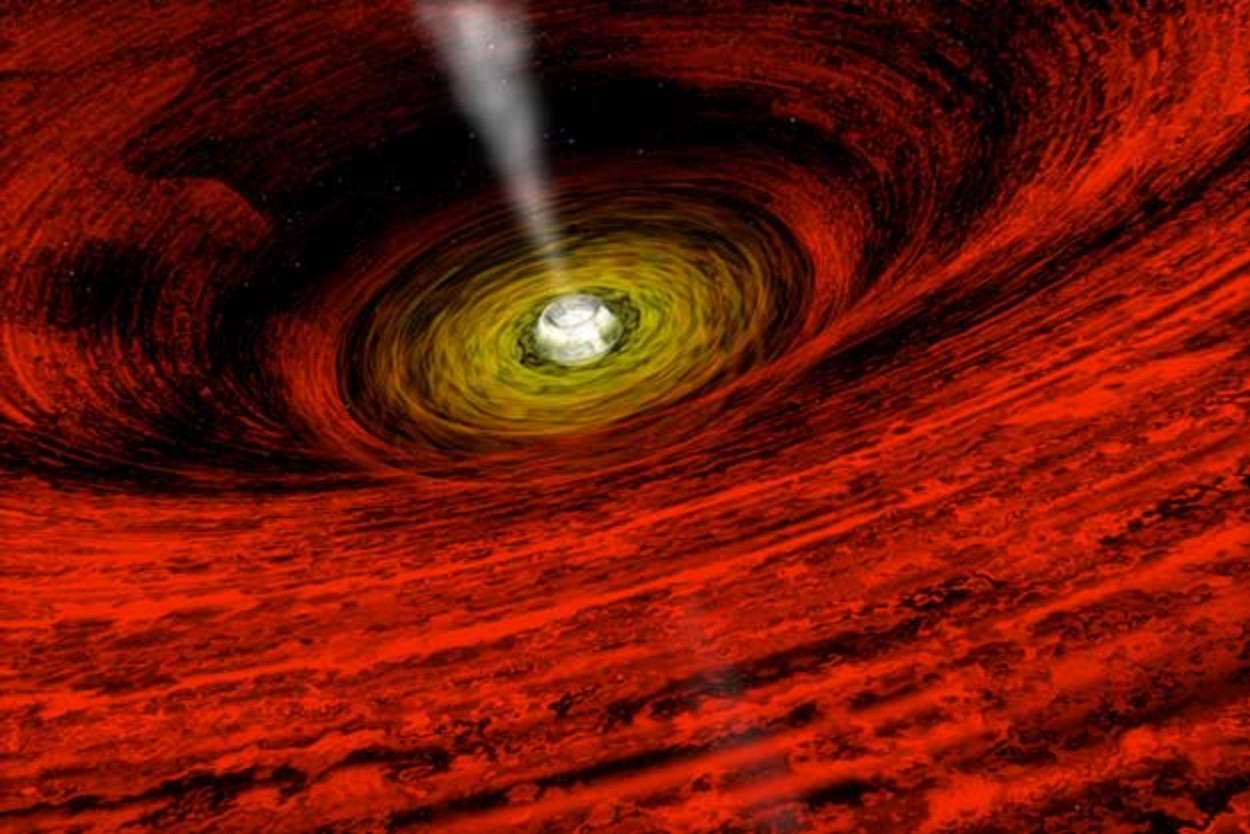
Matter falling into black hole forms an
accretion disk
Jets emitted from accretion disk
artist rendition of jets
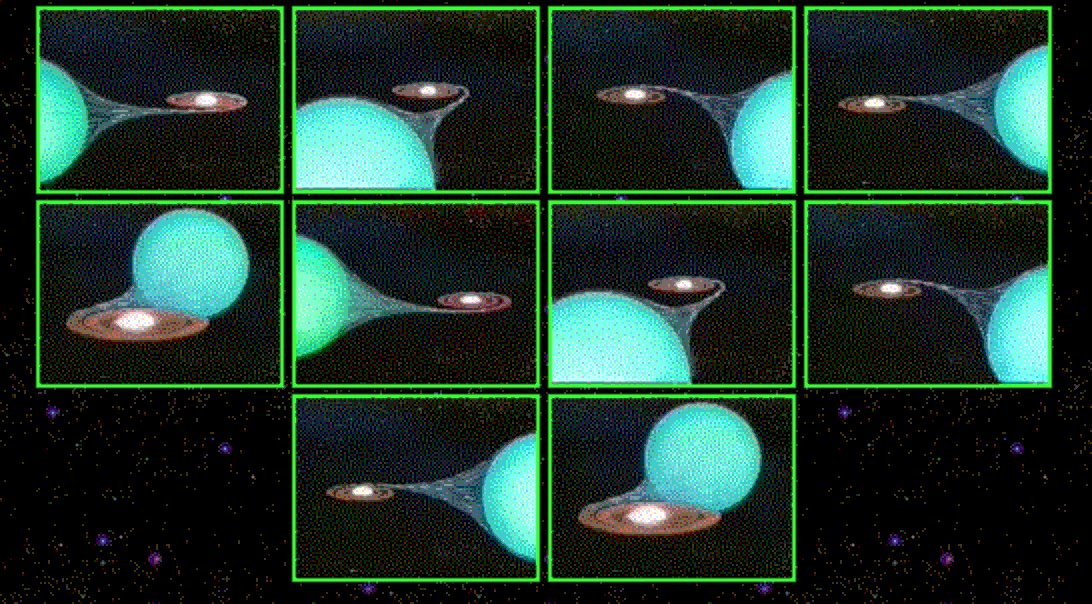
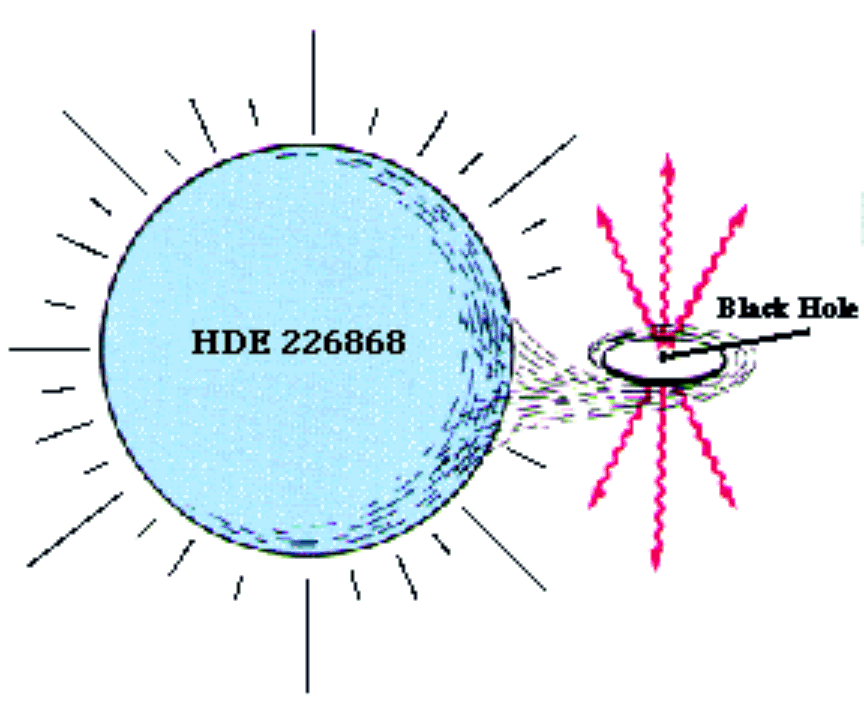
Black holes can have binary partner
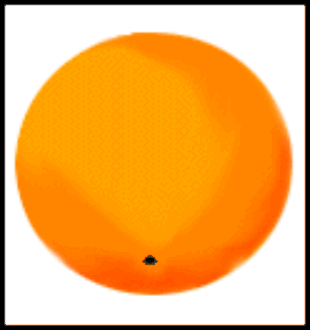
drawing of Cygnus X-1
side
,
back
,
front
Our galaxy has an estimated 100 billion stars and 100 million stellar remnant black holes.
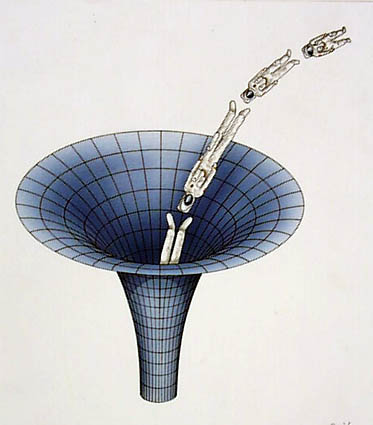
Falling into a black hole -
"spaghettification"
red shift
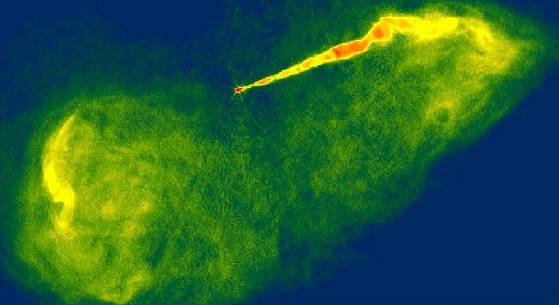
Picture of jets seen by radio telescope
time dilation
Explanation of time dilation
Supermassive black hole M87
HST picture of M87
Another view of M87 jet
M87 in radio
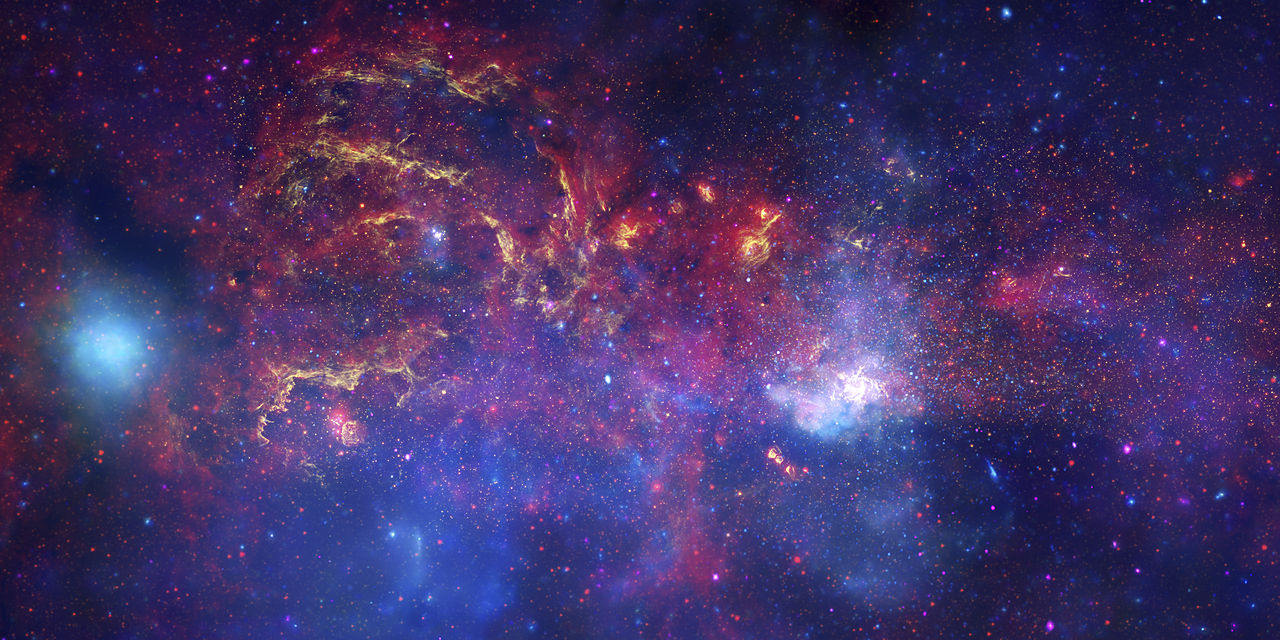
Center of our Milky Way galaxy
7.5-8 kParsec away
in direction of constellation Sagittarius
size of black hole = 44 million km diameter (0.3 AU)
mass of black hole = 4.3 million solar masses
Composite picture
(Hubble, Spitzer, Chandra),
caption